
Some organisations engage in renewal as an event rather than an ongoing process. In such cases, they find their organisational skillsets and capabilities are inadequate for the new reality. Often employees who excelled in a previous reality struggle in the new paradigm. In some cases, these employees become senescent. They can even act like a senescent cell and influence those around them to become toxic and malevolent.

Businesses throw Hail Marys when encountering a crisis, such as declining sales or disruptive innovation, or technology suddenly upends their business plan. Equally, leaders throw Hail Marys to meet analyst expectations when they have been coasting in the game for a long time. In sports, there is a thin line between arrogance and confidence, and business organisations often fall into the success trap.

In today’s business world of flux, explore units are agile, decentralised, experimental cultures, loose work processes, strong entrepreneurial and technical competencies, and relatively young and neurodiverse employees. In contrast to the exploit units, these small entrepreneurial units are inefficient, rarely profitable, and have no established histories. They often deliberately violate the norms valued in older parts of the organization.
Because the explore units are wildly different from the exploit incumbent, explorers are often undermined by the parent company, whose short-term needs override exploration. While the exploit teams win in the short term, they sink the company in the long.

Leaders must rightsize the organisation for their current reality when confronting change, a difficult task, as Kodak discovered.

History is replete with examples where bankrupt organisations had all the ingredients they needed to endure, but their perspective biased their evaluation. In many cases, engineers at established firms had invented the same technology that led to their firm’s demise. However, the entrants led the commercialisation of disruptive technologies rather than incumbents because of the relativity problem.
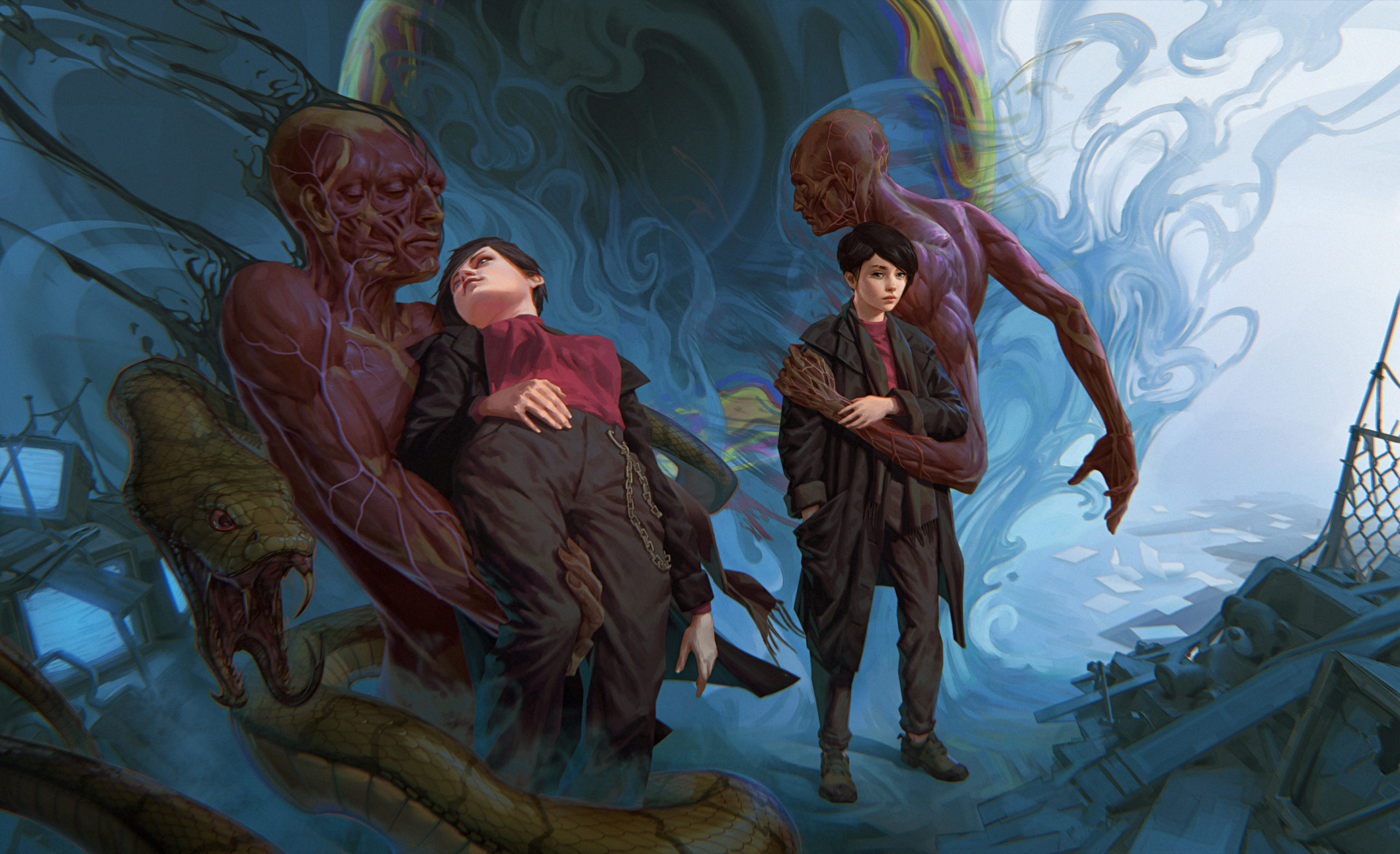
Organisations are egregores or egreg-ORGS. Organisations feed on the energy of their employees, suppliers and customers. Organisations reach their goals through the energetic alignment of their collectives. The thoughts and emotions of employees emit energy that is harnessed to create a collective entity greater than the sum of its parts. Egregores are not always harmful but have led to genocide, slavery and war. For this article, I want to highlight the idea of an organisation sapping the energy of its people and ostracising those who go against the grain.

Sports Academies are like Innovation and Incubation Labs

“Butterflies, for all their graces, are merely caterpillars who persevere.” Guillaume Apollinaire, Honda and the emergent strategy in America.

This Thursday Thought highlights the imperative for growth imposed on organisations that have become slaves to stock analysts. When an incumbent, established organisation has enjoyed growth, they experience a challenge similar to the bodybuilder. They do not want to invest in the foundations but would instead focus on the visible growth, the vanity exercises. Investing in and developing disruptive innovation markets is akin to maintaining the ligament, tendon and muscle sheath work. By its very nature, the market size of a new opportunity is small, so the returns also look small. To make matters worse, they are slow, and when compared to the might and muscle of maturity, they look puny.
“I Don’t Have an Opinion, the Theory Has an Opinion” – Clayton Christensen, inoculating value attribution bias by using the lens of theory.